Projects ·
Vibecoding Medicare Fraud Detection
2025 and 2026 turned government fraud into a headline argument with numbers ranging from tens of millions to nine billion for the same programs. The data behind it is public, so I built a screening system over 47 million rows to find out what it can actually show.
Waste, Fraud & Abuse
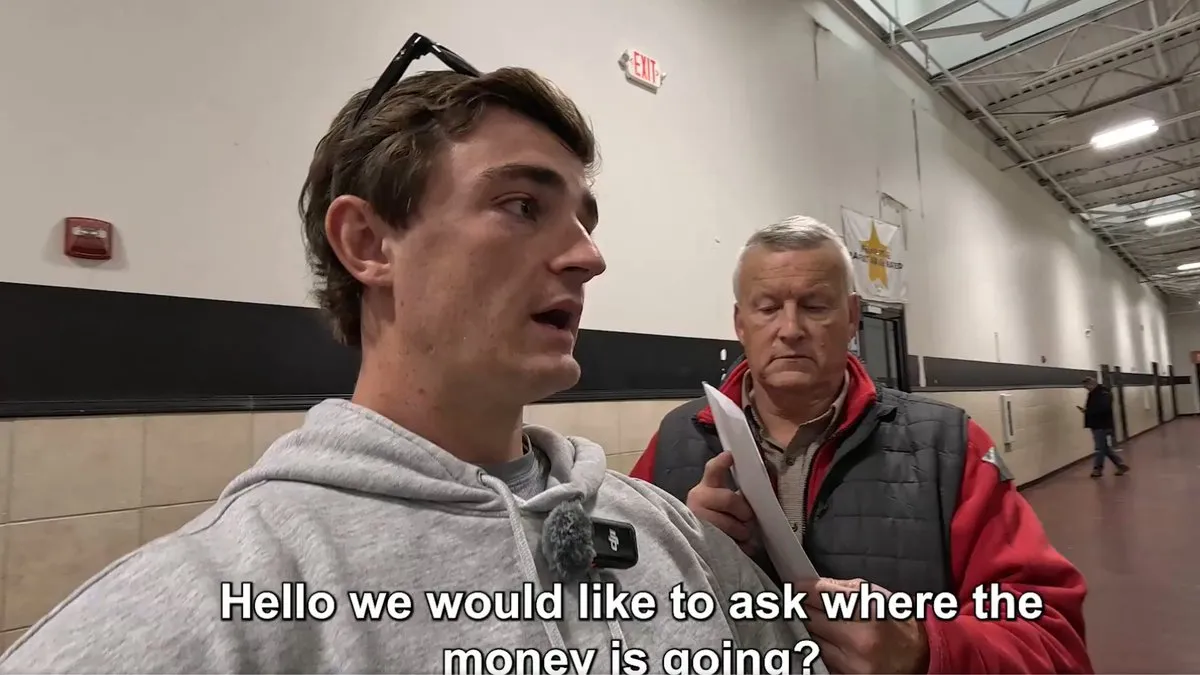
It all started with a viral video created by Nick Shirley, exposing the Medicaid fraud in Minnesota, then the proceeding videos going across the country, to Los Angeles to New Jersey.
It posed a question:
How can this much blatant fraud be happening all over the country?
Why isn’t this a higher priority for law enforcement?
Reducing fraud from our social safety nets should be a bipartisan issue across the board.
Vibecoding a solution
How hard is it to detect fraud? How easy would it be to vibecode?
Turns out you can vibecode a solution over the weekend with a simple prompt to Claude, I told Claude to make a dashboard to detect Medicare fraud, make no mistakes.
Note: The reality is that investigations take a long time. They require interviews, paper trails, documents, and subpoenas.
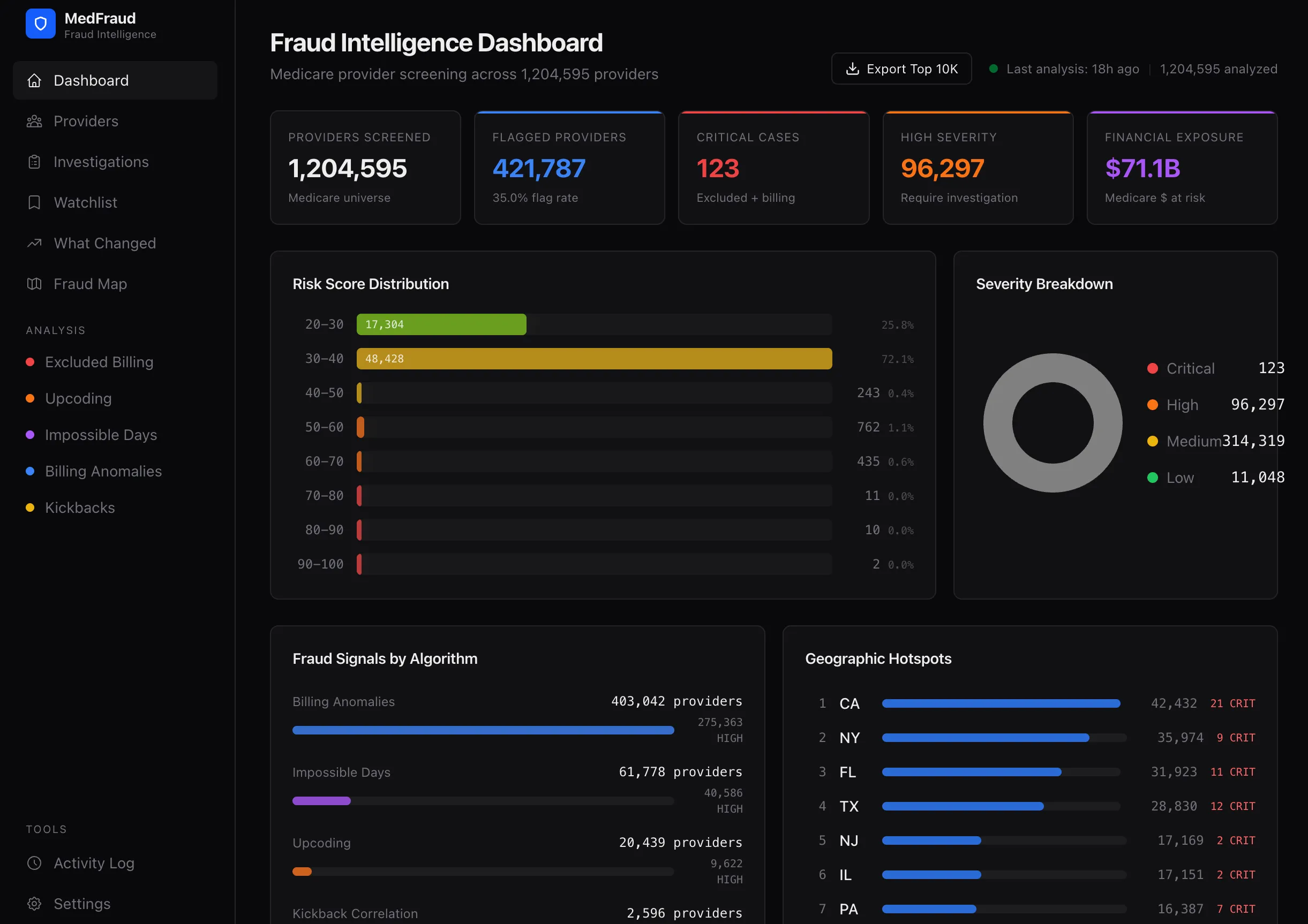
But it turns out you can easily vibecode a solution to find anomalies and low-hanging fruit. These signals aren’t an inditement, but frankly the numbers seem to be really difficult to explain.
Signals vs Noise
The signals that Claude chose for it’s risk score:
- Excluded Billing Provider: Someone on the OIG LEIEI still billing Medicare. This means the provider is already blacklisted from billing Medicare. We found 123 providers billing Medicare that were banned from billing Medicare
- Upcoding: Overuse of high-complexity E&M codes vs peers
- Impossible Days: More services/patients per day than is plausible . Of-course Quest Diagnostics is going to have 84X more services than their peers – they’re a $25B company. But how is Jeffrey Lin, an infectious disease doctor doing 12,000 services a day?
- Billing Anomalies: Procedure-level outliers vs specialty peers.
- Kickback Correlation: Industry payments lining up with brand-heavy prescribing
The datasources Claude pulled from:
| Dataset | Source | Rows |
|---|---|---|
| Medicare Provider Utilization | data.cms.gov | ~10M |
| CMS Open Payments (Sunshine Act) | openpaymentsdata.cms.gov | ~12M |
| Medicare Part D Prescriber | data.cms.gov | ~25M |
| OIG LEIE Exclusion List | oig.hhs.gov | ~75K |
Forty-seven million rows. Everything CMS and OIG publish about who billed what, who paid which physician, who prescribed what, and who is barred from federal health programs entirely.
What the weekend actually proved
The technology is not the bottleneck, and has not been for a while.
One person, public data, an embedded database, and a model doing most of the typing produces a working screening system over 47 million rows in a weekend.
Ten years ago this was a funded project with a data warehouse.
A screening tool produces leads, not findings.
Everything above outputs “this provider is statistically unusual.” Unusual is where an investigation starts. The distance from there to a charge is subpoenas, records, and interviews.
MEDICAREFRAUDDOTCOM.COM
I decided to make the app public, in read-only mode so no one can DDOS the app.
MedicareFraud.com was taken, so I decided to take https://medicarefrauddotcom.com/